

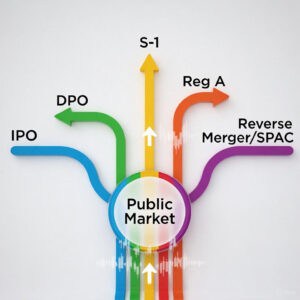

Direct Public Offerings in 2025
A Direct Public Offering (DPO) is an effective method for going public. Private companies may also raise capital by selling securities directly…
Read More

Does FINRA Rule 6490 Impact Going Public Transactions?
FINRA Rule 6490 has had an important impact on going public transactions specifically reverse mergers with public shell companies.
Read More



What are SEC Periodic Reporting Requirements? Securities Lawyer 101
Companies become subject to the SEC’s periodic reporting requirements in several ways, including by filing a registration under the Securities Act of…
Read More


Hamilton & Associates Law Group: Regulation A White Paper
Tier 1 of Regulation A provides an exemption for securities offerings of up to $20 million in a 12-month period, while Tier…
Read More


SEC Amends Accredited Investor Definition – Rule 506 Offerings
Rule 506 Offerings are the most common of the Regulation D exemptions from registration under the Securities Act of 1933, as amended…
Read More
Public Company SEC Reporting Requirements -SEC Requirements to Go Public
Public Company SEC Reporting Requirements - SEC Requirements to Go Public, Going Public Attorneys. Companies filing registration statements with the SEC become…
Read More
The Section 4(a)(2) Exemption – Exempt Offerings
Section 4(a)(2) of the Securities Act of 1933, as amended (the “Securities Act”) provides an exemption from the SEC’s registration statement requirements…
Read More

Why Form 10 Shells Are High Risk – Form 10 Reverse Mergers
Many issuers seeking to raise capital often attempt to go public using a reverse merger with a Form 10 public shell company.…
Read More


What Is A Form 10 Registration Statement? Form 10 Securities Lawyers
Form 10 shells are used as inventory for reverse merger transactions that take a company from private to public company status.
Read More