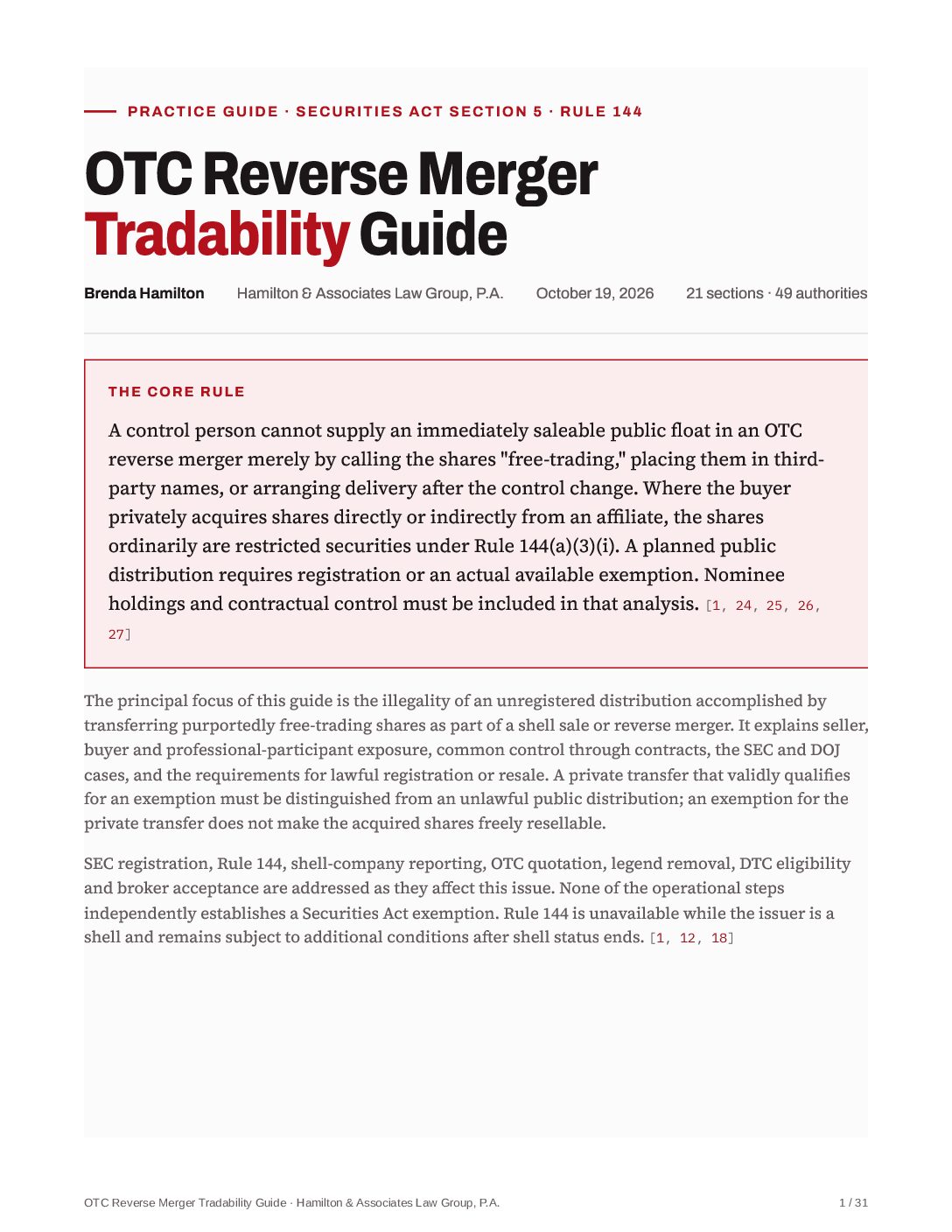
OTC Reverse Merger Tradability Guide
Why control-block and free-trading share packages in OTC reverse mergers violate Section 5. Covers Rule 144(i), shell status, Rule 145a, Form 211 and the case law.
Read More
Reverse Mergers & SPACs
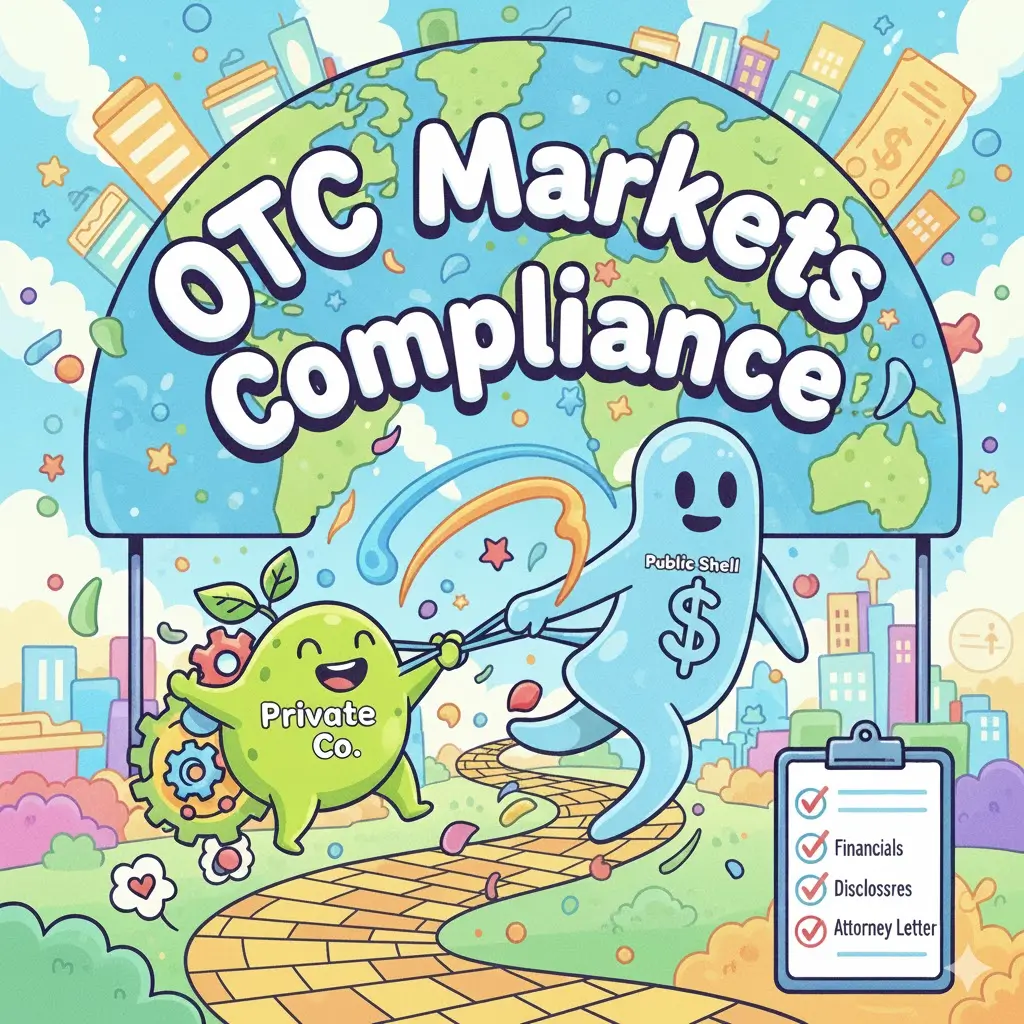
A reverse merger occurs when a private company becomes public by combining with an already-public shell company, while a SPAC (Special Purpose Acquisition Company) is a publicly traded “blank-check” company formed specifically to merge with a private business. Both routes offer alternatives to the traditional IPO, often providing faster timelines, greater deal certainty, and more flexible valuation negotiations. For companies seeking to access public markets efficiently-especially those in emerging or fast-growing industries-reverse mergers and SPACs can offer attractive pathways to raise capital and enhance visibility without the lengthy, unpredictable process of a standard public offering.
Why control-block and free-trading share packages in OTC reverse mergers violate Section 5. Covers Rule 144(i), shell status, Rule 145a, Form 211 and the case law.
Read MoreA " Reverse Merger " is a transaction whereby a privately held company becomes a Public Company ("Public Company" or "Public Company Candidate") by acquiring or merging with a publicly traded company that is usually quoted on the OTC Markets OTC Pink...
Read MoreA reverse merger occurs when a private operating company merges with a publicly traded shell company, acquiring control and assuming its reporting obligations. While reverse mergers offer a quicker path to becoming publicly traded, post-merger compan...
Read MoreStartups and businesses with limited cash looking to go public are understandably very money-conscious and want to use the most cost-effective route. The survival and/or further development of their business may depend on getting access to capital ra...
Read MoreSPAC stands for Special Purpose Acquisition Company . They are similar to blank check companies. The SPAC does an Initial Public Offering (an "IPO") as a shell company with no commercial operations to raise money from the public for the purpose of ac...
Read MoreOn June 9, 2011, the Securities and Exchange Commission (the "SEC") issued an Investor Bulletin (the "Bulletin") cautioning the public about risks associated with issuers that enter U.S. markets through reverse mergers with public shell companies. In...
Read MoreCorporate hijackings of public shell companies-also called corporate identity theft-has been around for more than two decades. The public companies taken over in hijackings have become a valuable assets for shell peddlers (frequently securities lawye...
Read MoreIf you'd like to learn more about reverse mergers or SPACs, you'll find additional resources and detailed articles below. These materials offer more insights for companies exploring alternative pathways to going public.