



OTC Markets’ Role in Secondary Offerings and Resales
The critical role of OTC Markets in facilitating secondary offerings and resales of restricted and control securities under SEC Rule 144. This…
Read More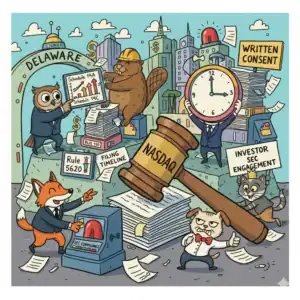
Nasdaq Annual Meeting Rules: Q&A Guide
This question-and-answer guide covers the legal and regulatory requirements for Nasdaq-listed companies holding their annual stockholder meetings. The article focuses on the…
Read More
Tiers and Transparency: Understanding the Differences Among OTCQX, OTCQB, and OTCID Markets
The article explains the OTC Markets Group's multi-tiered disclosure framework, which categorizes companies traded on the over-the-counter (OTC) electronic quotation system. The…
Read More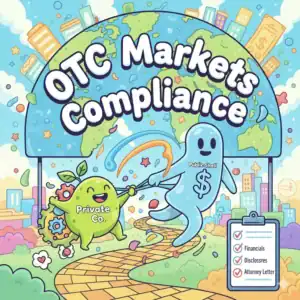
Reverse Mergers and OTC Markets: Compliance After the Transaction
This article discusses reverse mergers and the crucial need for post-merger compliance to ensure trading eligibility on OTC Markets. A reverse merger,…
Read More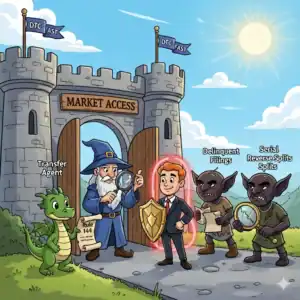
Why So Few Brokerage Firms Accept OTC Markets Shares — And What It Means for Investors
For many retail investors, trading or depositing shares of OTC-traded companies is challenging. A significant number of brokerage firms impose restrictions—driven by…
Read More
How Foreign Issuers Use Rule 12g3-2(b) for OTC Quotation
SEC Rule 12g3-2(b) offers a streamlined exemption for foreign private issuers to gain U.S. market visibility and access U.S. investors by qualifying…
Read More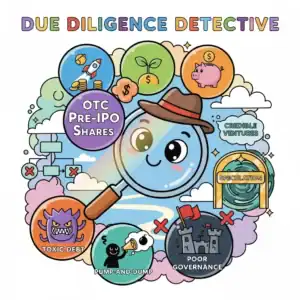
High Risk or Hidden Opportunity? Due Diligence When Investing in OTC IPOs and Pre-IPO Shares
This article provides a comprehensive guide to due diligence for investors interested in OTC IPOs and Pre-IPO Shares, emphasizing the high-risk nature…
Read More
What Is a Direct Public Offering (DPO) on the OTC Markets?
A Direct Public Offering (DPO) on the OTC Markets allows private companies to achieve public tradability and liquidity for existing shareholders without…
Read More
Corporate Actions and Symbol Changes on OTC Markets
The article explains how public companies quoted on OTC Markets must handle corporate actions—such as name or symbol changes, stock splits, mergers,…
Read More
The Penny Stock Graveyard – The OTC Markets Expert Market Explained: What Happens When Issuers Lose Quotation Eligibility
This article explains how issuers are downgraded to the OTC Markets Expert Market after losing quotation eligibility under SEC Rule 15c2-11, how…
Read More
OTC Markets Liquidity and Price Discovery
This article from Hamilton & Associates Law Group explores liquidity and price discovery on the OTC Markets, highlighting their unique operations compared…
Read More
Material Event Reporting on the OTCID Market for Non-SEC Reporting Issuers
On July 1, 2025, OTC Markets Group replaced its Pink Current Information tier with the OTCID Market, a modernized disclosure platform aligned…
Read More
OTC Markets Issuers and SEC Reporting: Website Requirements and Best Practices (2025 Guide)
Learn the 2025 website requirements and best practices for SEC-reporting OTC Markets issuers (OTCQX, OTCQB, OTCID). Ensure compliance with Regulation FD, SEC…
Read More
OTC Markets Listing for Canadian Issuers
Canadian public companies can reach U.S. investors by dual listing on OTC Markets through the Multijurisdictional Disclosure System (MJDS). Eligible issuers may…
Read More
Compliance for Cryptocurrency and Digital-Asset Issuers on OTC Markets
Crypto and blockchain issuers seeking OTC Markets quotation must comply with SEC Rule 15c2-11 by providing transparent disclosures on token operations, financials,…
Read More
Toxic Convertible Financing and OTC Markets Issuers
This article discusses the risks and consequences of toxic convertible financing, also known as "death spiral financing," for small and emerging companies…
Read More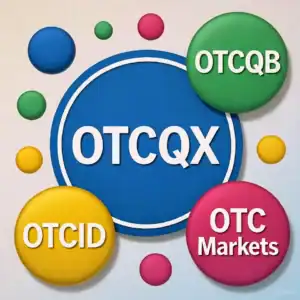
Comparing OTCQX, OTCQB, and OTCID: Which Tier Is Right for Your Company?
This article from Hamilton & Associates Law Group compares the three main tiers of the OTC Markets Group—OTCQX, OTCQB, and OTCID (formerly…
Read More
Form S-1 vs. Form S-3: A Practitioner’s Guide to Eligibility, Disclosure, and Incorporation by Reference (2025)
Form S-1 vs. Form S-3 — Eligibility, Disclosure Items & Incorporation by Reference (2025 Guide). Compare SEC Forms S-1 and S-3: who…
Read More
SEC Confidential Treatment Requests: Protecting Sensitive Business Information in SEC Filings (2025)
SEC Confidential Treatment Requests — How to Protect Sensitive Business Information (2025 Guide) Learn when and how to request confidential treatment from…
Read More
Uplisting from OTC Markets to Nasdaq or NYSE: The Uplisting Path and Compliance Milestones
The ultimate guide to uplisting from OTC Markets to Nasdaq or NYSE. Learn the strategic path, compliance milestones, and 'Corporate Cleanup' necessary…
Read More
Depositing OTC Markets Shares — And What It Means for Investors
For many retail investors, buying or depositing shares of OTC-traded companies is far harder than it appears. Even when a security displays…
Read More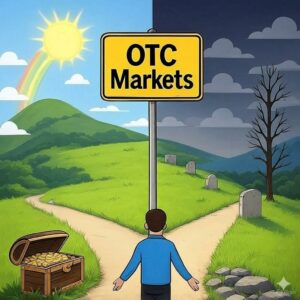
Cautionary Tales from the OTC Markets
The OTC Markets can serve as either a launchpad to major exchanges or a dead end, depending on issuer transparency, governance, and…
Read More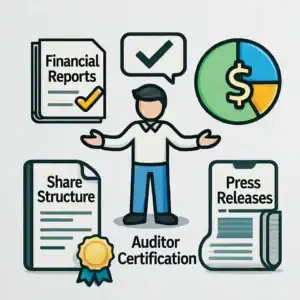
Common Disclosure Deficiencies Leading to OTC Markets Suspension
The document outlines common disclosure deficiencies that lead to OTC Markets suspending or downgrading issuers under Rule 15c2-11, which requires current, publicly…
Read More
Annual and Quarterly Reporting Under the OTC Markets Alternative Reporting Standard
The OTC Markets Alternative Reporting Standard outlines disclosure requirements for non-SEC-reporting issuers on OTCIQ, including annual and quarterly reports, officer certifications, and…
Read More
Understanding Rule 15c2-11 Current Information Standard
The SEC’s Rule 15c2-11 “Current Information” standard is the foundation of OTC Markets compliance. It requires that broker-dealers may publish or maintain…
Read More
How the OTC Markets Expert Market Works – Securities Lawyer 101
The OTC Markets Expert Market is a restricted trading tier created under the SEC’s 2021 Rule 15c2-11 amendments, allowing only broker-dealers and…
Read More
SEC and FINRA Enforcement Trends in the OTC Market
The have intensified enforcement in the OTC Markets. The focus has shifted sharply toward broker-dealer gatekeeper obligations, fraudulent stock promotions, and manipulative…
Read More
Promotional Activity & Investor Relations Rules on OTC Markets
OTC Markets’ Stock Promotion Policy governs any public communication—press releases, newsletters, videos, email blasts, or social-media posts—that could influence trading activity or…
Read More
OTC Markets Direct – Bypassing the Sponsoring Market Maker Under SEC Rule 15c2-11
Issuers may now work directly with OTC Markets through its OTCIQ Portal, bypassing the sponsoring market maker while maintaining full compliance under…
Read More