
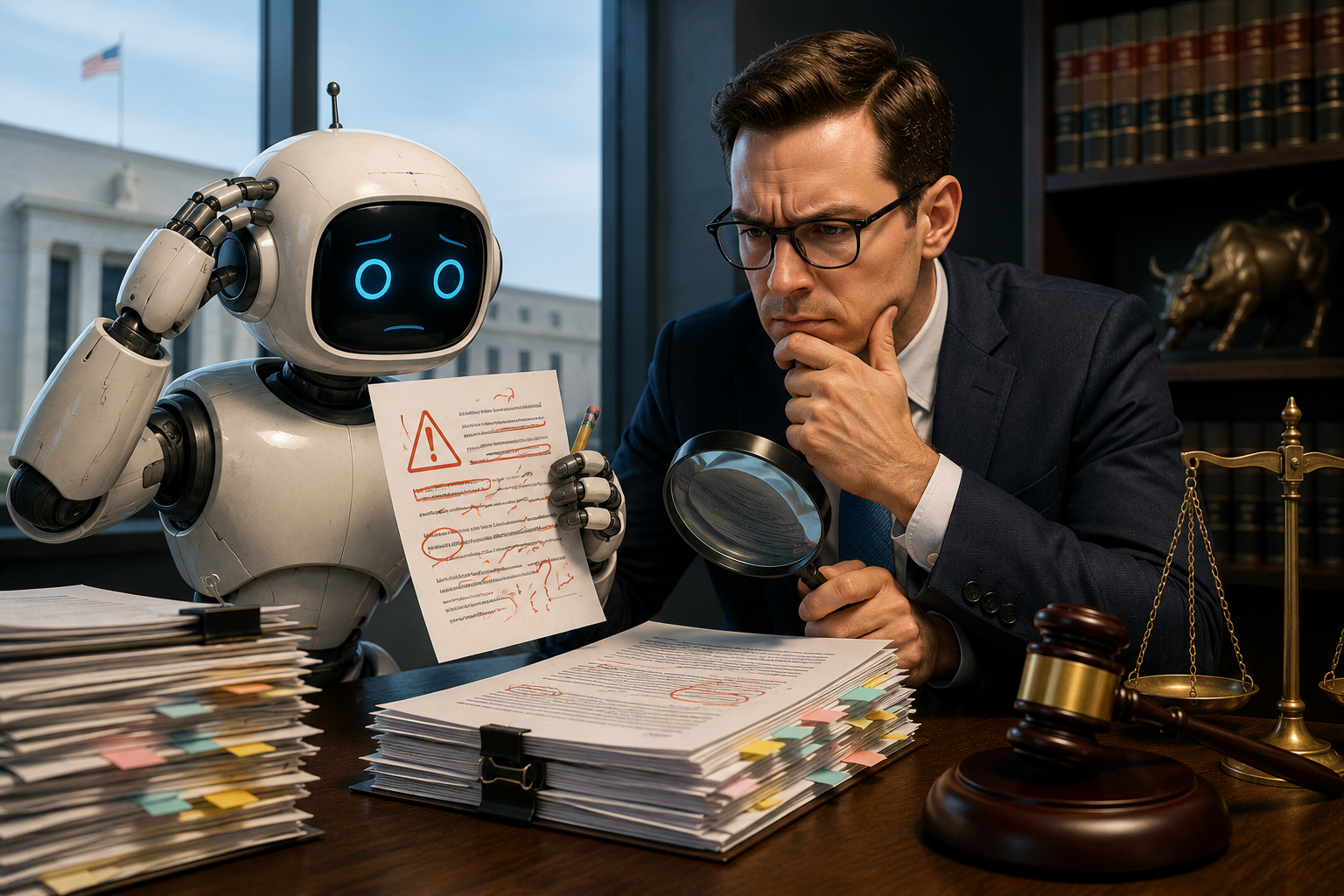
Artificial intelligence (“AI”) has become a powerful tool in securities disclosure preparation. AI-driven drafting systems can now generate registration statements, risk factor summaries, and even responses to SEC comments in seconds. But while AI improves efficiency, it also introduces new risks. When AI misinterprets regulatory nuance or technical requirements, issuers, underwriters, and counsel remain responsible for the consequences.
AI in Securities Disclosure Drafting
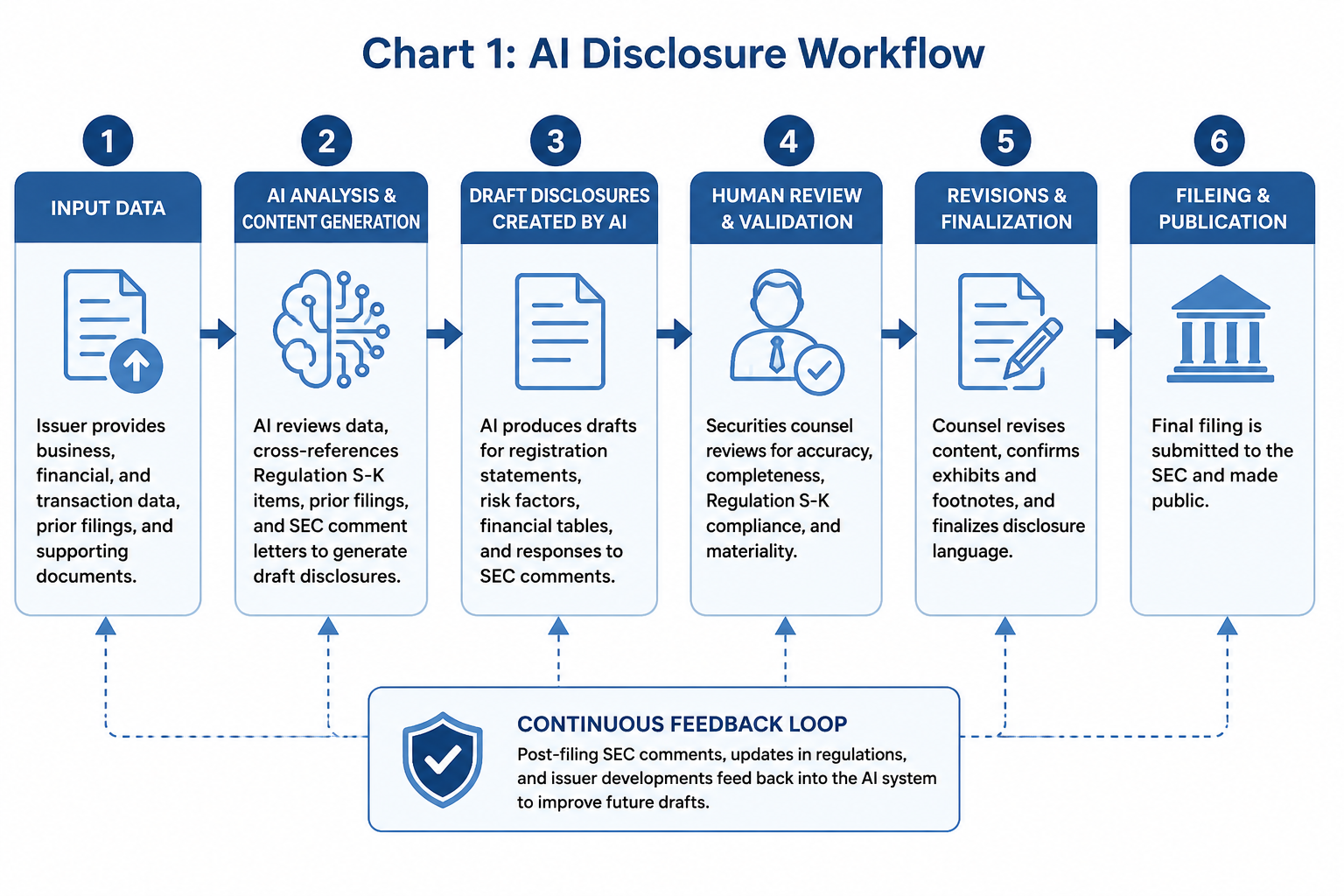
AI tools are increasingly used to draft registration statements such as Forms S-1, F-1, and 10-K. They cross-reference Regulation S-K items, assemble risk factors, and even suggest responses to SEC comments based on historical filings. For instance, AI systems can analyze hundreds of prior SEC comment letters to predict common disclosure deficiencies. However, automation cannot yet account for the issuer’s unique business model, transaction structure, or regulatory posture.
When Artificial Intelligence Gets It Wrong
AI occasionally produces technically incorrect or noncompliant results. Common errors include mislabeling exhibits, omitting required financial footnotes, or misinterpreting ‘shell company’ definitions under Rule 144(i). An AI model might also conflate the requirements of Item 504 (Use of Proceeds) with Item 701 (Recent Sales of Unregistered Securities), producing inaccurate or misleading information. Such issues can expose issuers and counsel to SEC enforcement or investor claims.
For additional discussion of SEC disclosure requirements, see the Using Form S-1 to Go Public guide available on SecuritiesLawyer101.com.
Human Oversight Remains Essential
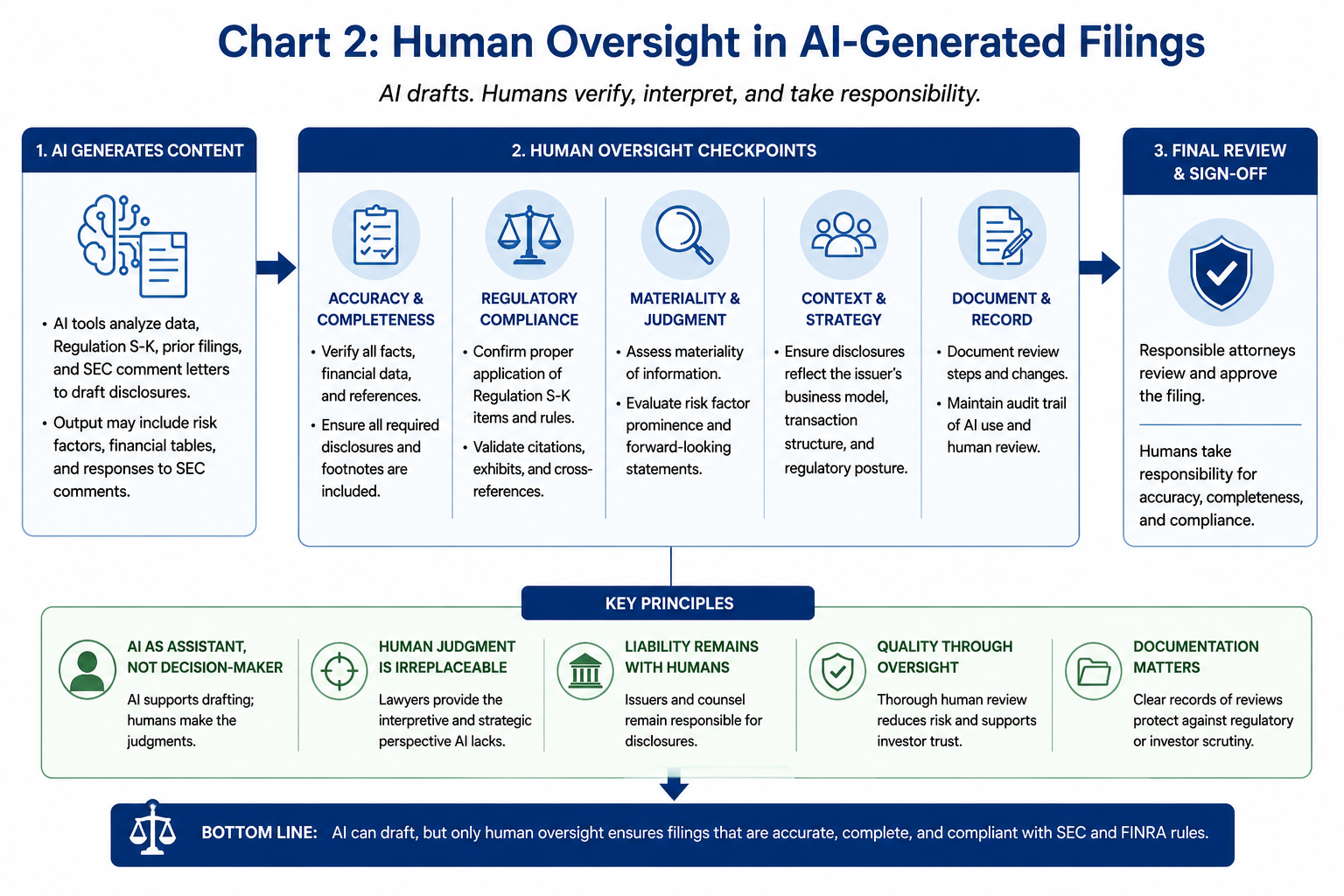
Securities counsel must validate every AI-assisted disclosure for accuracy and completeness. This includes cross-checking each financial table, exhibit reference, and Regulation S-K citation. Human lawyers provide the interpretive and strategic perspective that AI lacks—particularly in areas involving judgment, materiality, and forward-looking statements. As such, AI should function as a drafting assistant, not a decision-maker.
The Role of Issuer, Underwriter, and Investor’s Counsel After AI
- Issuer’s Counsel: Must ensure AI-generated content reflects management’s actual disclosure intent and business narrative.
- Underwriter’s Counsel: Retains due diligence obligations under Section 11(b) of the Securities Act, even when reviewing AI-drafted filings.
- Investor’s Counsel: Should identify when issuer disclosures were AI-generated and evaluate whether any material misstatements resulted from automation errors.
Regulatory Oversight and Emerging Guidance
The SEC and FINRA are closely monitoring the rise of AI in securities disclosure and trading. Future guidance may address standards for AI validation, disclosure of automation use, and certification by responsible attorneys. For now, firms should maintain clear documentation of human review steps and AI tool limitations.
Conclusion: Accuracy Over Automation
AI has tremendous potential to streamline the disclosure process, but securities filings require human judgment. When AI gets it wrong, the liability remains with the issuer and its counsel—not the algorithm. Hamilton & Associates Law Group continues to help issuers, underwriters, and investors integrate AI responsibly while maintaining compliance with SEC and FINRA rules.
This article is provided for general informational purposes only and does not constitute legal, accounting, or investment advice. To speak with a Securities Attorney, please contact Brenda Hamilton at 200 E Palmetto Rd, Suite 103, Boca Raton, Florida, (561) 416-8956, or by email at [email protected].
Hamilton & Associates | Securities Attorneys
Brenda Hamilton, Securities Attorney
200 E Palmetto Rd, Suite 103
Boca Raton, Florida 33432
Telephone: (561) 416-8956
Facsimile: (561) 416-2855
www.SecuritiesLawyer101.com