
Submission status is only the beginning
After a company-related action request is submitted, FINRA may assign a case number or provide electronic confirmation. That confirms that the matter entered the review process, but it does not necessarily mean the action has been processed. FINRA may request additional information, ask for corrected documents, require transfer agent verification, or review the issuer’s public reporting and regulatory history.
Processed actions and market publication
When an action is processed, the relevant market information may be reflected through FINRA systems such as the Daily List, which includes new issues, deleted issues, symbol and name changes, and other corporate actions for OTC equity securities. Issuers should monitor the Daily List and coordinate with their transfer agent, OTC Markets, DTC, brokers, and data vendors to confirm that market information is updated consistently.
Information requests and lapsed submissions
Rule 6490 permits FINRA to ask for additional documents or information to verify the accuracy of the submitted materials. If the Requesting Party fails to provide a sufficiently detailed response within 90 days after a FINRA request, the request may be deemed lapsed. A lapsed matter can create timing, disclosure, and transaction problems.
Deficiency determinations
If FINRA determines that an SEA Rule 10b-17 Action or Other Company-Related Action is deficient, FINRA may refuse to process the documentation. Rule 6490 requires FINRA to provide written notice to the Requesting Party. The notice must state the specific factor or factors that caused the deficiency determination.
Common deficiency factors include incomplete or inaccurate documents, lack of proper authority, delinquent reporting status, regulatory or fraud-related issues involving persons connected to the issuer or action, and uncertainty in the settlement and clearance process.
Practical response strategy
Issuers should respond to FINRA requests promptly and completely. Each response should include a clear cover explanation, responsive documents, corrected inconsistencies, and confirmations from the transfer agent or other relevant parties when needed. A disorganized or incomplete response can make a manageable comment process look like a more serious deficiency.
Can an Issuer Appeal a FINRA Rule 6490 Deficiency Determination?
Yes, but the deadline is short
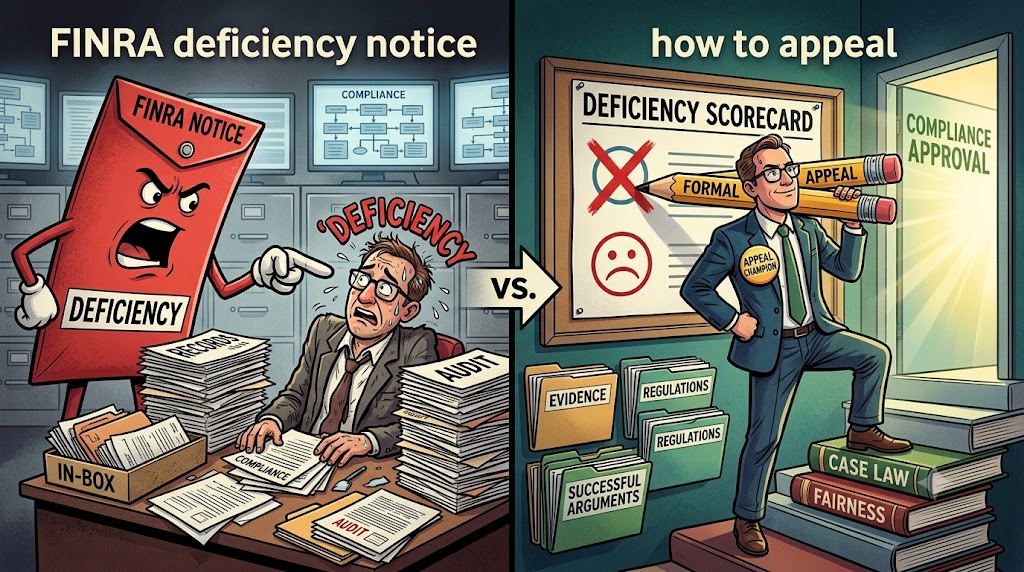
A Requesting Party may appeal a FINRA Rule 6490 deficiency determination. The appeal must be submitted within seven calendar days after service of the deficiency notice. Because the deadline is measured in calendar days, weekends and holidays can matter.
The written appeal must be submitted in the manner required by the rule, currently by email, unless an alternative method is ordered. The appeal must include proof of payment of the non-refundable appeal fee and must set forth the Requesting Party’s specific defenses to FINRA’s deficiency determination.
The appeal should be evidence-based
A Rule 6490 appeal should not simply argue that the company needs the action processed. The appeal should respond directly to the deficiency factor or factors identified by FINRA. If FINRA cited incomplete documents, the appeal should explain why the documents are complete or provide corrected documents. If FINRA questioned corporate authority, the appeal should include the governing law, charter provisions, board approvals, shareholder approvals, state filings, and transfer agent support.
If FINRA cited reporting status, regulatory history, fraud-related concerns, or settlement and clearance uncertainty, the appeal must address those issues directly. Unsupported conclusions are unlikely to be persuasive.
The action is stayed during the appeal
During the appeal, the processing of the requested company-related action is stayed. The requested action will not be processed while the appeal is pending. This means the issuer should consider the impact on financing deadlines, merger closing conditions, investor communications, and market expectations.
Failure to appeal makes the determination final
If the Requesting Party does not appeal within seven calendar days, the Department’s deficiency determination becomes a final FINRA action. That does not mean the issuer has no business alternatives, but it does mean the particular deficiency determination will not be reviewed through the Rule 6490 appeal process.
Who Reviews Deficiency Appeals Under FINRA Rule 6490?
Appeals are reviewed by a three-member subcommittee
FINRA Rule 6490 provides that appeals of deficiency determinations are reviewed by a subcommittee composed of three current or former industry members of FINRA’s Uniform Practice Code Committee. This means the appeal is not simply returned to the same FINRA Operations staff member for reconsideration.
The subcommittee reviews the appeal materials and supporting documents submitted by the Requesting Party. The written record is therefore critical. The issuer should assume that the appeal must stand on the documents and arguments submitted.
The appeal must address FINRA’s stated deficiency factors
The deficiency notice must state the specific factor or factors that led FINRA to refuse processing. The appeal should be organized around those factors. If the issue is document completeness, address completeness. If the issue is authority, address authority. If the issue is regulatory history, reporting status, or settlement uncertainty, address those topics with evidence.
A well-organized appeal may include a procedural timeline, a table of challenged deficiency factors, legal authority, corporate documents, transfer agent confirmations, public filing references, regulatory status evidence, and declarations or certifications where appropriate.
Additional documents may be submitted before review
Rule 6490 permits the Requesting Party to submit any additional written documents until the time the appeal is considered. That does not mean the issuer should wait until the last moment. The strongest appeal package is usually complete when filed, with supplemental documents added only when necessary.
The subcommittee decision is a final FINRA action
After the subcommittee considers the appeal, FINRA issues a determination. Under Rule 6490, that determination is a final FINRA action. The issuer should consider the appeal carefully because the stakes may include trading symbol status, capitalization changes, merger implementation, financing conditions, and investor communications.
When Can an Issuer Expect a FINRA Rule 6490 Appeal to Be Reviewed by the Subcommittee?
Monthly review schedule
FINRA Rule 6490 states that the subcommittee convenes once each calendar month to consider all appeals received during the prior month. This monthly cadence makes timing important. An appeal filed just after a monthly cutoff may not be considered until the next monthly review cycle.
The rule also provides that the subcommittee will render a determination within three business days after the day the appeal is considered. That determination is final FINRA action.
The appeal deadline comes first
Before thinking about the monthly meeting schedule, the issuer must preserve the appeal right. The Requesting Party must file the appeal within seven calendar days after service of the deficiency notice. Missing that deadline means the FINRA Operations deficiency determination becomes final FINRA action.
The short filing window is one reason issuers should organize corporate records before a deficiency occurs. If counsel must locate board minutes, shareholder consents, state filings, transfer agent confirmations, debt instruments, and reporting status evidence after the notice arrives, the appeal may be difficult to prepare on time.
Processing is stayed during the appeal
The requested corporate action will not be processed while the appeal is pending. This can affect reverse split effective dates, symbol changes, merger timelines, financing conditions, and uplisting plans. Companies should consider how the appeal period affects public communications and transaction documents.
Practical timeline planning
A company facing a deficiency appeal should create a calendar that includes the service date, seven-calendar-day appeal deadline, appeal fee payment deadline, document submission cutoff, expected monthly review window, and anticipated determination period. The company should also identify which public disclosures may need to be updated if the action remains unprocessed.
Is an Issuer Required to Appeal a FINRA Rule 6490(d) Deficiency Determination?
No, but failing to appeal has consequences
An issuer is not required to appeal a FINRA Rule 6490(d) deficiency determination. The decision to appeal is strategic and depends on the facts, evidence, costs, timing, transaction needs, and likelihood of success. However, if the Requesting Party does not appeal within seven calendar days after service of the deficiency notice, the Department’s determination becomes a final FINRA action.
That means the requested company-related action will not be processed through that submission. The issuer may need to evaluate whether it can cure the issue, restructure the transaction, make corrective disclosures, submit a new request if appropriate, or pursue other legal options.
When an appeal may make sense
An appeal may make sense when the issuer has strong evidence that FINRA’s stated deficiency factor is incorrect, incomplete, or curable. For example, if FINRA questioned corporate authority and the issuer can produce valid board approvals, shareholder approvals, charter provisions, state filings, and transfer agent confirmations, an appeal may be worth considering.
An appeal may also be important when the unprocessed action affects an uplisting, financing, merger, acquisition, debt restructuring, shareholder rights transaction, or market integrity issue.
When an appeal may not make sense
An appeal may not be the best strategy if the issuer lacks the evidence needed to address the deficiency, if the corporate action documents truly are defective, if the company is not current in required reports, or if there are unresolved regulatory, fraud-related, settlement, or clearance concerns. In those circumstances, the issuer may need to fix underlying problems before seeking processing.
The appeal fee is non-refundable, and processing is stayed during the appeal. The company should compare the benefits of appeal against the cost, timing, public disclosure issues, and practical ability to win.
Disclosure and transaction implications
Even when an issuer chooses not to appeal, it should consider whether the deficiency determination affects previously announced transactions or public statements. Investors, lenders, merger parties, and service providers may need updated information if the action will not proceed as planned.
An issuer that receives a Rule 6490 information request or deficiency notice should involve securities counsel immediately to preserve timing, appeal rights, and market strategy.
To speak with a Securities Attorney, please contact Brenda Hamilton at 200 E Palmetto Rd, Suite 103, Boca Raton, Florida, (561) 416-8956, or by email at [email protected].
Hamilton & Associates | Securities Attorneys
Brenda Hamilton, Securities Attorney
200 E Palmetto Rd, Suite 103
Boca Raton, Florida 33432
Telephone: (561) 416-8956
Facsimile: (561) 416-2855
www.SecuritiesLawyer101.com