

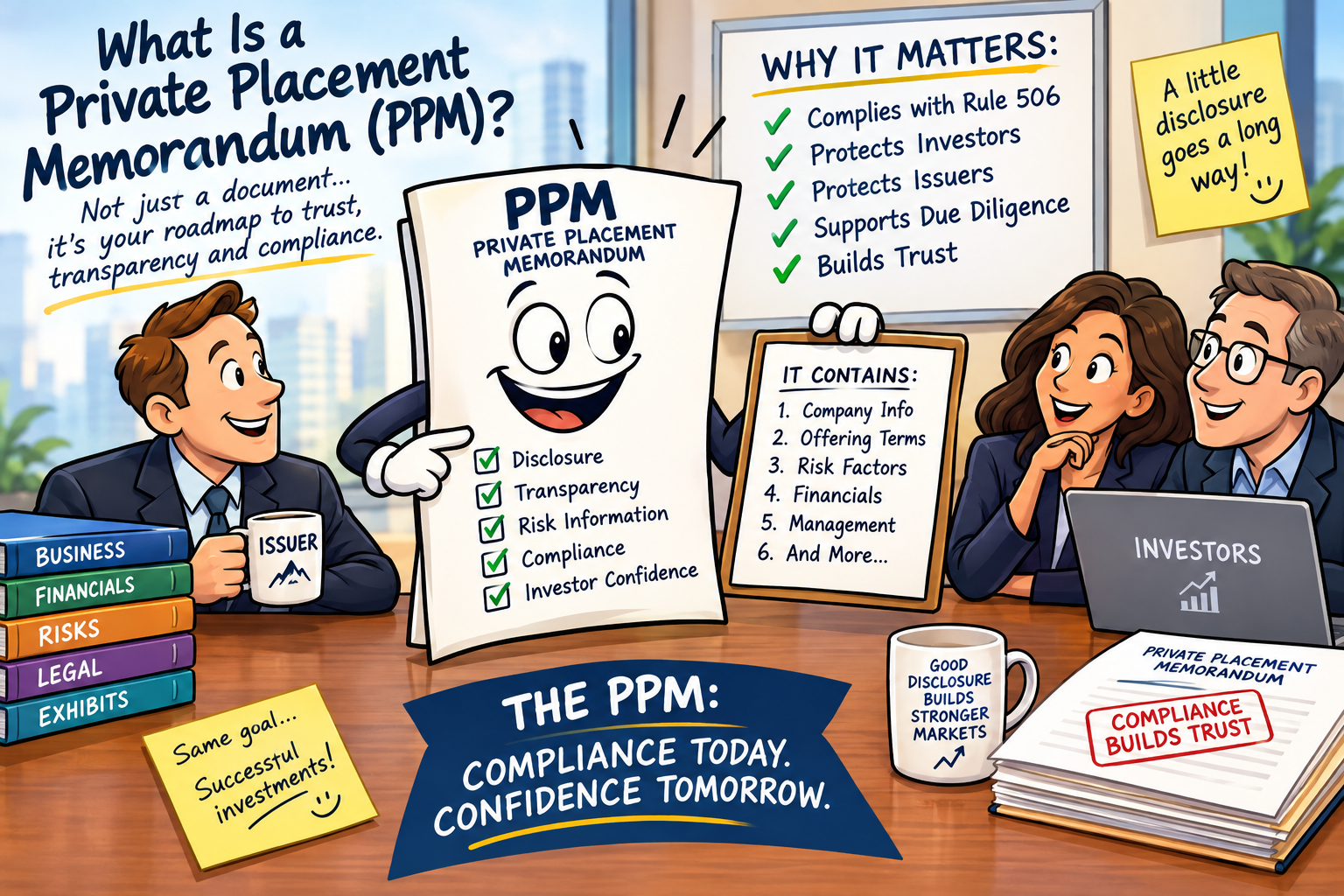
A Private Placement Memorandum (PPM), also called an Offering Memorandum, is a disclosure document used in private securities offerings exempt from registration under the Securities Act of 1933, typically under Regulation D. It outlines the investment terms, risks, and issuer details, serving as evidence of compliance with Rule 10b-5 anti-fraud requirements.
Purpose of a PPM
A PPM serves multiple purposes: (1) compliance with disclosure obligations, (2) protection of investors through full transparency, (3) protection of issuers against future liability, (4) facilitation of due diligence, and (5) presentation of a professional marketing document for private investors.
When Is a PPM Required?
A PPM is required under Rule 506(b) when non-accredited investors participate or when state laws require written disclosure. Even if only accredited investors are involved, most issuers prepare a PPM to demonstrate compliance and reduce the risk of investor claims.
What a PPM Contains
While the SEC provides no formal template, a complete PPM typically includes these sections:
1. Cover Page
Lists issuer name, contact information, security type, exemption relied upon, offering amount, and transfer restriction legend.
2. Executive Summary
Provides an overview of the issuer’s business, the offering structure, and key investment terms.
3. Risk Factors
Outlines material business, financial, and industry risks, including liquidity limitations, competitive threats, and management dependence.
4. Description of the Company
Covers company background, products or services, market opportunity, intellectual property, and strategic goals.
5. Management and Ownership
Identifies directors, officers, and key personnel, including compensation and related-party transactions.
6. Terms of the Offering
Describes offering size, use of proceeds, minimum investment, fees, closing procedures, and investor qualification standards.
7. Securities Description
Explains rights, preferences, and restrictions of the securities, such as voting, dividends, or conversion features.
8. Financial Information
Includes audited or unaudited financial statements, interim financials, and pro forma data if applicable.
9. Tax Considerations
Provides a general discussion of federal income tax implications with a disclaimer for investors to seek independent advice.
10. Subscription Procedures
Outlines steps for subscribing, escrow procedures, and accredited investor certification requirements.
11. Exhibits
Includes key documents such as subscription agreements, corporate documents, financial statements, and Form D filings.
Legal Standard: Anti-Fraud Compliance
Under Rule 10b-5, issuers must ensure disclosures are complete and accurate, avoiding misleading omissions. A PPM must provide balanced information that enables informed investment decisions.
PPMs and Investor Suitability
PPMs typically include investor questionnaires and representations verifying accredited or sophisticated investor status, ensuring compliance with Rule 501(a) and Rule 506(c) verification standards.
Benefits of Preparing a PPM
A PPM documents disclosure efforts, mitigates liability risk, enhances investor trust, streamlines broker-dealer review, and provides a disclosure foundation for future capital raises.
Best Practices for Drafting a PPM
Issuers should retain experienced securities counsel, tailor disclosures to their specific risk profile, align the PPM with Form D and marketing materials, and update it for material changes.
Conclusion
A Private Placement Memorandum is both a compliance document and a communication tool. It provides essential transparency, protects both issuers and investors, and establishes trust in private capital markets.
This article is general information, not legal or financial advice. Securities counsel is worth retaining early in this process. To speak with a Securities Attorney, please contact Brenda Hamilton at 200 E Palmetto Rd, Suite 103, Boca Raton, Florida, (561) 416-8956, or by email at [email protected].
Hamilton & Associates | Securities Attorneys
Brenda Hamilton, Securities Attorney
200 E Palmetto Rd, Suite 103
Boca Raton, Florida 33432
Telephone: (561) 416-8956
Facsimile: (561) 416-2855
www.SecuritiesLawyer101.com